
WHY ISN'T CREAM ENOUGH ANY MORE AT 50?
- 2 minutes de lectura
- 17 Jun, 2026
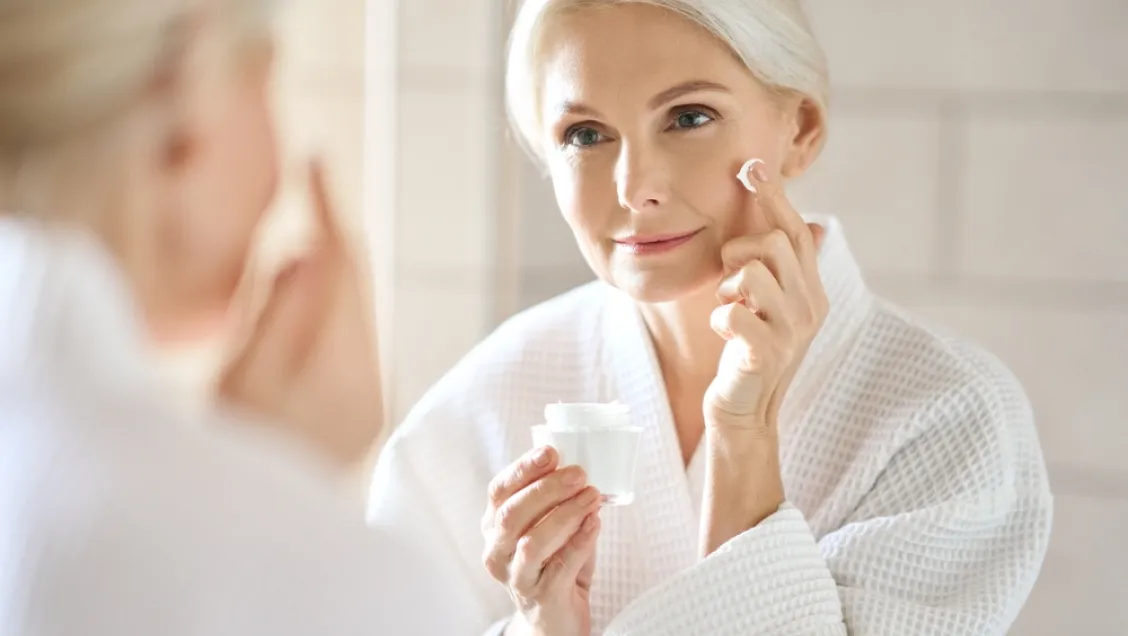
Things change (thankfully). And in the world of beauty, even more so. If for years the cosmetics industry has categorised creams by age, that is starting to change. It may no longer make sense to choose a cream to prevent ageing the moment you turn 25, nor to switch to one for mature skin once you cross the 50 mark.
And we don't say this only because we no longer want to erase wrinkles the overpromised claims are now a thing of the past, but because, from a dermatological point of view, you can be 50 years old and have the skin of a 25-year-old. And vice versa.
Age is the factor that least influences skin ageing
A fact that backs up the idea that it makes no sense to choose a cream based solely on the age that appears on your ID, is that, as Maroñas explains to us, “age only accounts for 25% of skin ageing, while the exposome, that is, the set of harmful external factors we are exposed to throughout our lives (sun, tobacco, pollution) determines the 75%”, the expert points out. One more reason to use sunscreen 365 days a year.
The (quick) guide to choosing a facial cream well
Having accepted that we should choose creams with our skin's specific needs in mind rather than its age (although some needs will obviously be linked to actual age), here is the quick guide to the essential ingredients for each need, explained by Dr Lidia Maroñas:
“It makes more sense to talk about biological age (the one that truly reflects the state of our skin) than about chronological age (the one marked by our date of birth)”,
Explanation:
- To provide hydration: creams with hyaluronic acid, ceramides and fatty acids.
- To boost radiance: the key active ingredient is glycolic acid (at a concentration of 10%).
- To fight the signs of photoageing (dark spots, loss of firmness, dull tone): a combination of vitamin C, ferulic acid and phloretin with depigmenting agents such as tranexamic acid and cellular transformers such as retinol.
- To prevent or improve expression lines: repairing agents such as retinol or alpha-hydroxy acids.
All of the above confirms that, when it comes to choosing a cream or a treatment, it makes more sense to talk about biological age than chronological age. Of course, as we get older our skin will change and will not have the same characteristics which is why we still talk about young skin and mature skin, but it is important not to focus only on age when choosing a treatment.
Book your assessment
Gratuita